

Nominations for Membership of the ISSCD Board are now invited

Following the 2023 revision of the Constitution, the ISSCD Governing Board consists of eight (8) members, including the President, the President Elect (future President), the Past President, four general Board members and an Executive Director. The President Elect and general Board members are elected by the General Assembly every two years. The individual elected as President Elect is a voting member of the Governing Board for six years, first as the President Elect (two years), then as President (two years) and finally as the Past President (two years). The Board itself selects the Treasurer and Secretary from the general Board members every 2 years. Election of all four other general Board members takes place every two years. General Board members are elected to serve two year terms and may not serve more than two terms.

The positions up for election in 2026 are President Elect and two general Board members.

What does it involve being a member of the ISSCD Board?

All Board Members have responsibility to ensure proper strategic and scientific oversight and financial management of the ISSCD. The ISSCD Board meets online every month for 1.5 hours with pre-reading up to 2 hours. Board Members are expected to miss no more than three Board Meetings per year unless there are extenuating circumstances. General Board members can be tasked as the Board sponsor for setting up specialist Committees. Also please refer to the ISSCD Constitution “Article 8 Code of conduct board members” for further details.

In addition, the President, President-Elect, Secretary, Treasurer, and Executive Director (the “Executive”), and other Board Members who wish to attend, meet every week for 1 – 1.5 hours to discuss ISSCD business.

Board Members are unpaid.

As an international organisation we encourage nominations from across the globe and also from a range of disciplines and career stages.

Further information about the ISSCD is available: https://www.isscd-global.org/about-us/

 
What does it involve being the President-Elect / President of the ISSCD Board?

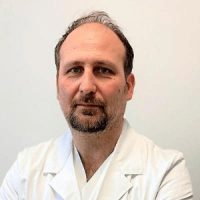
The construction of the President-Elect, President and Past-President roles was set up to ensure continuation of leadership within the ISSCD. As such, the President-Elect role is intended as a springboard for the Presidency. The President-Elect is present at Executive and Board meetings and helps shape strategic decisions to promote the goals of the ISSCD. They assist the President in meetings with committees, sponsors, patient organizations and other potential stakeholders. The President-Elect uses their tenure to increase their network, understand the strategic and scientific hurdles within the global celiac disease arena and prioritize goals for the upcoming Presidency. Dr Iris Jonkers, current ISSCD President-Elect.

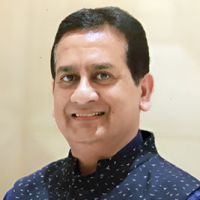
Rarely is there the opportunity to change the world, being President of ISSCD provides just that. The global community of people affected directly or indirectly by coeliac disease is vast. For them, the leadership of ISSCD is important, because the foods they eat and medical care they receive result from the work by members of ISSCD. As President you are steward to the global medical and scientific research community supporting people with coeliac disease. How ISSCD is run and what ambitions it might have are the business of the Board and especially the President and President-Elect. The time I spend on ISSCD business as President is exceptionally rewarding. On the Board and Executive we are constantly sharing advances and information from around the world, we talk regularly, we discuss and debate and then enact and fund programs we believe will have lasting benefit on the global coeliac community. It has been an exhilarating experience for me to see the coeliac community advance with ISSCD moving to a central role. Dr Robert Anderson, current ISSCD President.

 
ISSCD invites its Members to nominate other ISSCD members to stand as candidates for the following Board positions:

President Elect

General board members (n=2)

Deadline for submission of nominations is 5 June, 2026 10:00 GMT (+1) to ISSCD info@isscd-global.org

When will voting take place and results be announced?

ISSCD members will be able to vote at the ISSCD online General Assembly, 17 September 2026, 13:00 (GMT+1) or if unable to attend they may submit a proxy in advance. Full information will be available on the ISSCD website and within an upcoming members’ e-newsletter. The results of the election will be announced at the International Celiac Disease Symposium, Melbourne.      

The Board

The Governing board consists of the following:
  • President
  • President Elect
  • Secretary
  • Treasurer
  • Four other elected Members
  • Executive Director

The Board members are elected at the General Assembly for a two year term and can be re-elected for one further two year term.

President of the ISSCD Dr Robert Anderson

Dr Robert Anderson

President of the ISSCD

Dr Anderson is an Australia-based gastroenterologist, translational immunologist, and pharmaceutical and diagnostic developer. Dr Anderson has a global and multi-disciplinary perspective on celiac disease. He trained in medicine and completed a doctorate in New Zealand, and then completed specialist gastroenterology training in Melbourne, Australia.

His research in celiac disease began as a post-doctoral fellow at Oxford University focused on T cells and continued in Melbourne and then Boston USA designing and overseeing preclinical and clinical development of gluten-specific immunotherapy. He has led basic, preclinical and clinical research and pharmaceutical development programs focused on defining and modifying the adaptive immune response to gluten. He is a clinician-scientist who has worked closely with celiac disease patient support groups and industry. Currently, he is leading commercial development of T-cell diagnostics at Novoviah Pharmaceuticals, advises biopharmaceutical developers, and practices clinical gastroenterology at Mackay Base Hospital.

Associate Professor Iris Jonkers

President Elect

Dr Jonkers is an associate professor at the University Medical Center Groningen (UMCG), Netherlands. Throughout her career Dr Jonkers has sought to understand how gene expression is regulated and affects biological processes in health and disease. Since 2014, Dr Jonkers has investigated transcription regulation in celiac disease and has since specialized in understanding how gene expression and disease pathways are affected by genetic factors associated with autoimmune diseases.

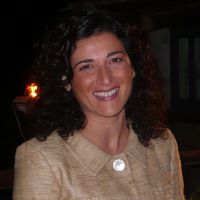
Prof Fabiana Zingone

Associate Professor Fabiana Zingone

Treasurer

Dr Zingone is an Associate Professor at the Gastroenterology Unit of the Azienda Ospedale Università Padova, Italy. She conducts her research and clinical activity on immune mediated gastrointestinal disorders with a particular focus on celiac disease and inflammatory bowel disease. She is the author of more than 120 peer reviewed publications, mostly on the topic of gluten related disorders. She is also a member of the board of SIGE (Italian Society of Gastroenterology and Digestive Endoscopy) and recently published the Italian guidelines for celiac disease. She teaches gastroenterology to medical students, residents in gastroenterology, and PhD students with a particular focus on celiac disease, inflammatory bowel disease, and malabsorption.

Professor Elena Verdu

Secretary

Professor Verdu is a Professor of the Division of Gastroenterology and Director of the Farncombe Family Digestive Health Research Institute (FFDHRI), Department of Medicine. She is also Director of the Axenic Gnotobiotic Unit at McMaster University and research chair, tier 1 in microbial therapeutics and nutrition in gastroenterology, Canada. Her work is focused on gut bacteria and their effect on gut function and inflammation. Professor Verdu has developed a program to investigate host microbial and dietary interactions in celiac disease and IBD. Her research aims at deciphering commensal and opportunistic pathogen metabolism of gluten and other dietary proteins and how that process affects their inflammatory capacity in the host.

Professor Jernej Dolinsek

Prof Dolinsek is Head of the Pediatric Department at the University Medical Center Maribor, Slovenia. He has a teaching position at the Medical Faculty, Faculty of Health Sciences and Faculty of Agriculture and Bio-Systemic Studies at University of Maribor. Prof Dolinšek’s major clinical and research focus are gluten related disorders, especially celiac disease. He has spent valuable time in Tampere, Finland with the research group of Prof Markku Mäki, during which he learned various clinical and translational aspects about celiac disease. In 2003 he defended his doctoral thesis at the University of Ljubljana focusing on apoptotic processes in celiac disease.

He is a co-author of ESPGHAN guidelines on celiac disease diagnosis (2020), ESPGHAN position statement on celiac disease management (2022), Guidelines on diagnosis of Dermatitis herpetiformis (2021) and Salerno criteria for diagnosing Non-Celiac Gluten Sensitivity (2015). He is an extremely active core member of the ESPGHAN Celiac Disease Special Interest Group and is the Coordinator of the European Project “Celiac disease in Focus”.

Dr Edwin Liu

Professor of Pediatrics, Children’s Hospital Colorado, University of Colorado School of Medicine. Director of the Colorado Center for Celiac Disease, USA. Dr Liu is a pediatric gastroenterologist and director of the Colorado Center for Celiac Disease and part of NASPGHAN’s Celiac Disease special interest group. He is one of the founding members of the Society for the Study of Celiac Disease and inaugural council member.

His specific interest has been in celiac disease serology, mass screening and celiac disease epidemiology, particularly as it relates to type 1 diabetes. He is seeking to help expand collaboration in pediatric celiac disease in the US to other countries internationally through their collaborative groups within NASPGHAN and also through RAISE-CD.

Professor Govind Makharia

Professor Makharia is based in the Department of Gastroenterology and Human Nutrition, All India Institute of Medical Sciences, New Delhi, India. Through a systematic review and meta-analysis, which has been highly cited, Dr Makharia and his team explored the global burden of celiac disease and found it to be 0.7%. He and his team conceptualised a pilot multinational Asian study including Indonesia, Thailand, Japan, Singapore, China and India, which has shown prevalence of celiac disease to be 2.4% in patients with irritable bowel syndrome. Through this study, it came to light that celiac disease is indeed emerging in Asia.

With the support of the ISSCD, Prof Makharia, along with his team organised the International Celiac Disease Symposium (ICDS) in India in 2017 which was a huge success. In spring 2024, Prof Makharia led and hosted the inaugural Asian Pacific Celiac Disease Symposium and he will constitute the Asia Pacific Society for the Study of Celiac Disease (APSSCD) within ISSCD. To aid improvement in patient care, he and his team have been working on developing a Celiac Care Mobile application. He has authored more than 359 papers (h-index 60) and is the recipient of research grants from various funding agencies worth more than USD 1,795,983.
Professor Ludvig Sollid

Professor at the University of Oslo and a senior consultant at the Oslo University Hospital – Rikshospitalet. Also director of the KG Jebsen Coeliac Disease Research Centre, Norway. Professor Sollid’s research interests are focused around genetics and immunology of autoimmune diseases in general and celiac disease in particular. His group has made important contributions to the understanding of the molecular basis of celiac disease, in particular the role of HLA genes, the existence of gluten reactive (HLA-DQ restricted) T cells in the celiac intestinal lesion, the identification of immunotoxic gluten peptide sequences and the involvement of the transglutaminase 2 in the pathogenesis of the disease. His group is currently working on the characterization of the antigen receptors of T cells and B cells that recognize the celiac disease relevant antigens gluten and transglutaminase 2.